Homocysteine
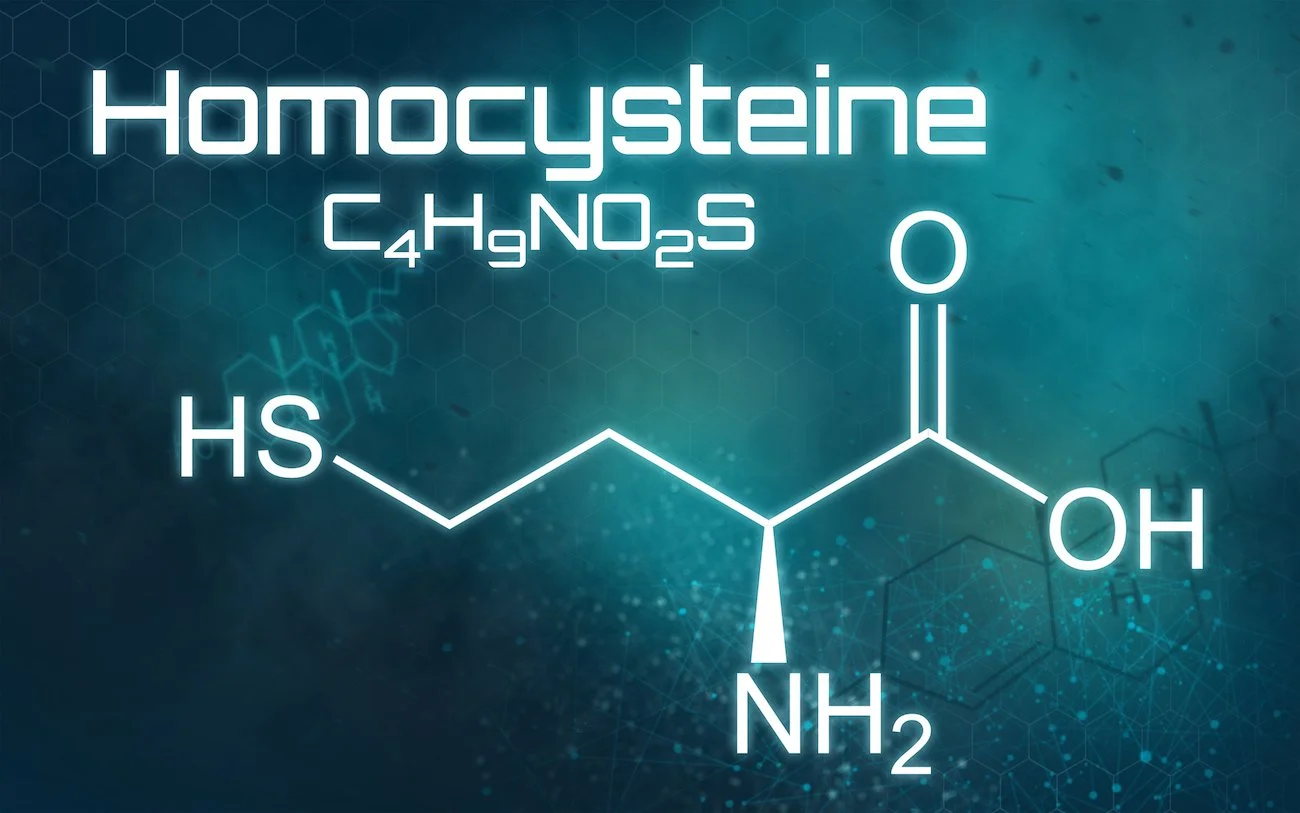
Homocysteine is an amino acid in the blood produced when the body breaks down proteins, specifically methionine.
Homocysteine is an important part of the methylation cycle as it must to recycled back into methionine. Methionine then gets converted into SAM-e which is the universal methyl donor that allows the methylation process to begin.
When there are SNP’s to genes like MTR and MTRR, homocysteine clearance can be slowed down. If homocysteine is not efficiently converted back to methionine (remethylated), the methylation cycle slows down, leading to impaired cellular methylation and increased oxidative stress.
What Is Homocysteine?
Homocysteine is a natural substance your body makes when it processes protein.
Think of homocysteine as a temporary byproduct produced while your body is doing its everyday work.
Your body is designed to recycle homocysteine or convert it into other useful substances. To do this, it relies on nutrients such as vitamin B12, folate (B9), and vitamin B6.
When everything is working properly, homocysteine is processed and kept at healthy levels.
Why Can You Have Too Much Homocysteine?
Imagine a factory with a conveyor belt.
The factory produces homocysteine, but another part of the factory is responsible for processing it.
If the processing system cannot keep up, homocysteine starts to accumulate.
Why Is Excess Homocysteine a Concern?
High homocysteine levels are associated with several health concerns:
Heart and blood vessel health: Elevated levels are linked to increased cardiovascular risk.
Brain health: Higher levels have been associated with cognitive decline and dementia.
Blood circulation: Elevated homocysteine can be associated with blood vessel dysfunction and an increased risk of blood clots.
Nutritional deficiencies: High levels can be a warning sign that your body lacks sufficient B12, folate, or B6.
What Does Homocysteine Have to Do With Methylation?
Methionine starts the process. Your body uses methionine, an amino acid from protein, to make a substance called SAMe.
SAMe donates methyl groups. These methyl groups help support DNA regulation, neurotransmitter production, and many other cellular functions.
Homocysteine is produced. After SAMe donates its methyl group and goes through another chemical step, homocysteine is formed.
Your body recycles homocysteine. With help from folate (B9) and vitamin B12, homocysteine can be converted back into methionine, allowing the cycle to continue.
What Can Cause High Homocysteine?
Common causes include insufficient folate, B12, or B6, reduced kidney function, hypothyroidism, certain medications, and genetic differences affecting homocysteine metabolism.
A common genetic variation in MTHFR can influence homocysteine levels, especially when folate intake is low.