What Is Low-Level Laser Therapy?

Low-Level Laser Therapy (LLLT) is a cutting-edge, non-invasive treatment that utilizes specific wavelengths of light to stimulate cellular function and promote healing. Unlike high-intensity lasers used in surgical procedures, LLLT employs low-power lasers or light-emitting diodes (LEDs) to penetrate the skin without causing damage. This therapy is renowned for its ability to reduce inflammation, alleviate pain, and accelerate tissue repair, making it a valuable tool for managing conditions such as arthritis, soft tissue injuries, and chronic pain. By enhancing cellular energy production and modulating biological processes, LLLT offers a scientifically-backed approach to healing that aligns with the body's natural recovery mechanisms, reaching the cells directly and providing a promising alternative for those seeking effective, non-invasive therapeutic options.
Low Level Laser Therapy (LLLT)

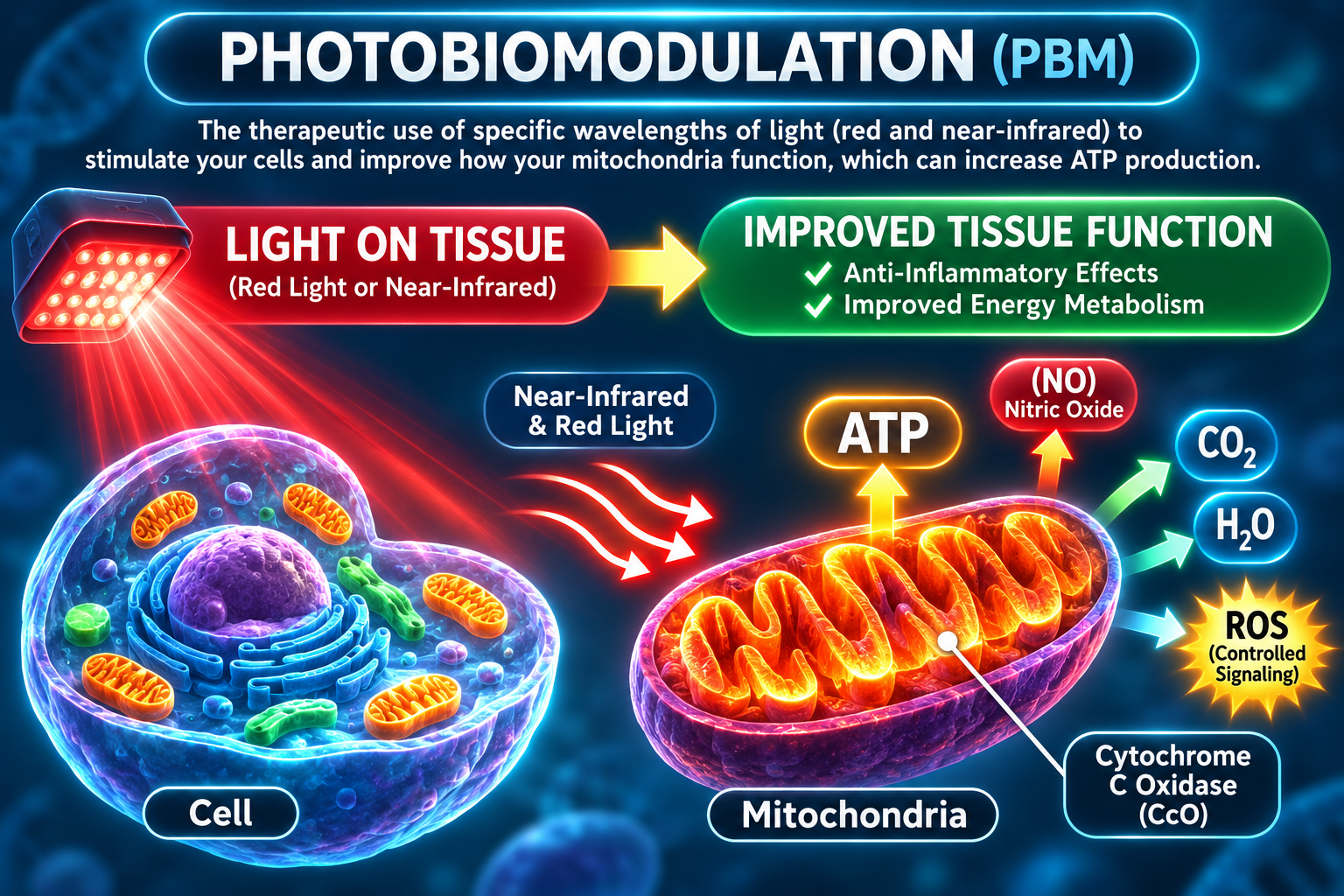
Low-level laser therapy (LLLT) targets mitochondria by stimulating cytochrome c oxidase, boosting ATP production, and reducing oxidative stress. Red and near-infrared wavelengths (650nm to 850nm) power this cellular mechanism.

Key Cellular Mechanisms

  • Cytochrome c Oxidase: Photons are absorbed by this critical enzyme in mitochondrial complex IV.

  • Nitric Oxide Release: Light dissociates inhibitory nitric oxide, freeing up oxygen consumption.

  • ATP Synthesis: Electron flow increases, accelerating adenosine triphosphate energy production.

  • Reactive Oxygen Species: Low-dose metabolic stress helps modulate helpful antioxidant and cell defense pathways.

Photobiomodulation diagram: red and near-infrared light reaching a cell's mitochondria, with ATP, NO, CO2, H2O, ROS

Benefits of Low Level Laser Therapy

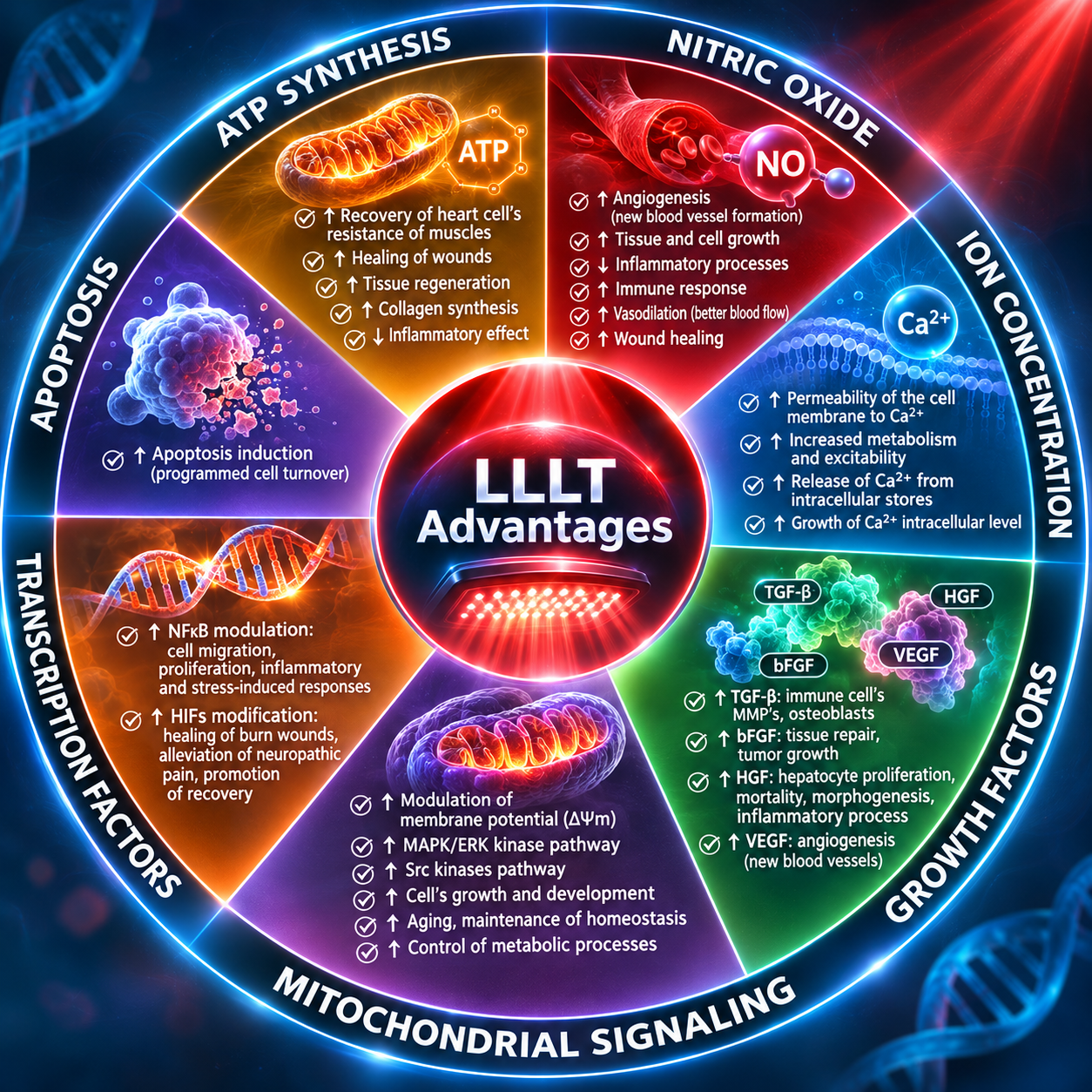
Wheel diagram of low-level laser therapy advantages: ATP synthesis, nitric oxide, ion concentration, growth factors