Can You Take Methylene Blue Every Day?
It is one of the most common questions from people who are new to methylene blue research: can you take it every day, or do you need to take breaks? The answer is more nuanced than a simple yes or no, and understanding why leads to some genuinely interesting science about how methylene blue works at the cellular level.
The Short Answer
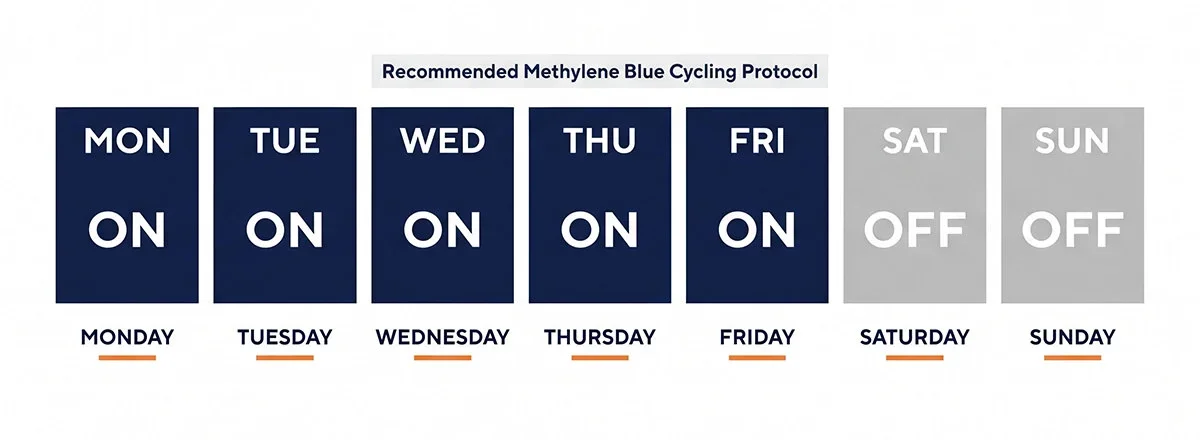
You can take methylene blue daily, and many researchers do. But most protocols that follow the research closely recommend cycling rather than continuous daily use. The most commonly referenced cycling approach is five days on followed by two days off each week.
The reason has everything to do with how methylene blue behaves at different doses and over time, which brings us to one of the most important concepts in methylene blue research.
What Is Hormesis and Why Does It Matter Here?
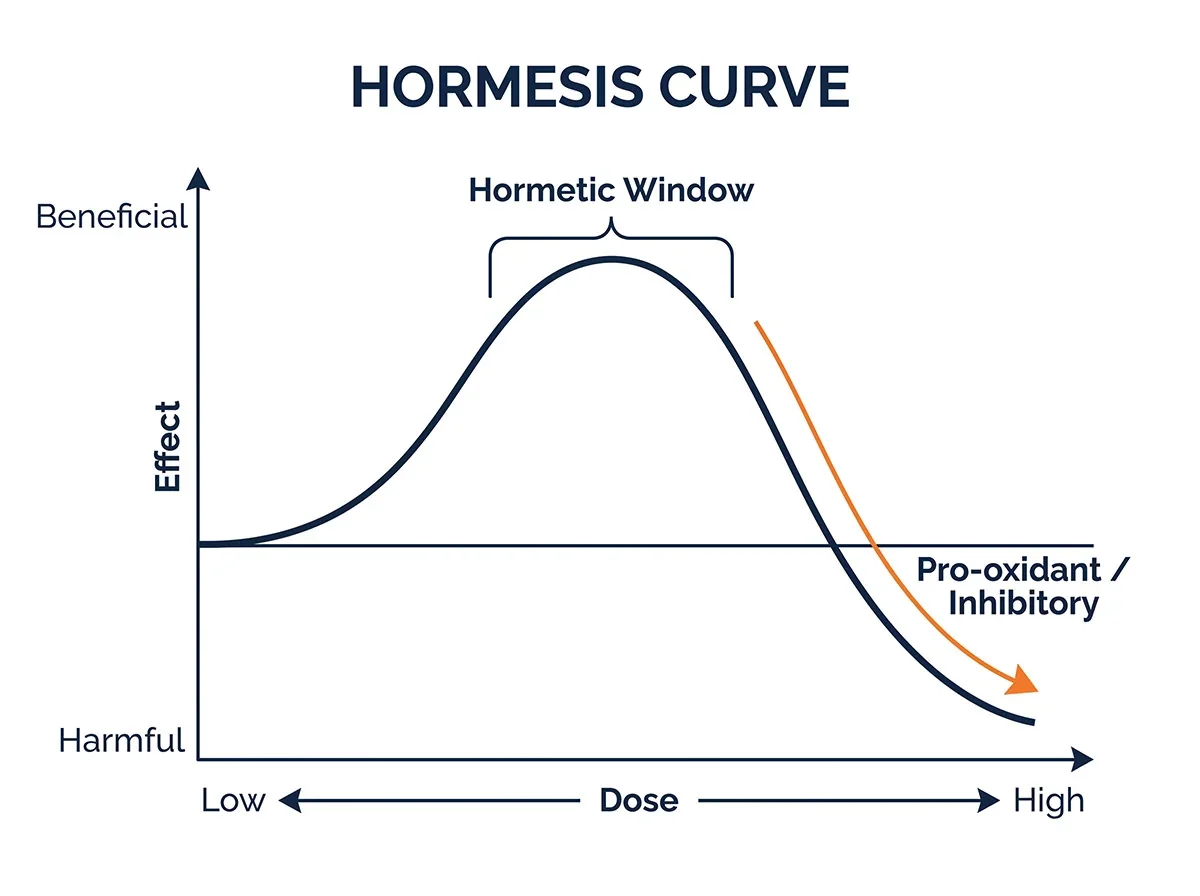
Methylene blue is what researchers call a hormetic compound. Hormesis describes a specific pattern of response where low doses produce beneficial effects and higher doses either produce no benefit or actively reverse it.
At low concentrations methylene blue acts as an efficient electron carrier in the mitochondrial electron transport chain. It steps in to help cells produce energy more effectively. But at higher concentrations the same compound flips from behaving as an antioxidant to behaving as a pro-oxidant, actually generating the reactive oxygen species it would otherwise help neutralize.
Low concentrations between 0.5 and 4 micromolar enhance mitochondrial function, while higher concentrations above 20 micromolar inhibit cytochrome c oxidase and impair respiration.
This is not a minor footnote. It is the foundational reason why researchers treat methylene blue very differently from most compounds. More is not better. In fact, more can actively work against you.
Why Cycling Is Recommended
There are two distinct reasons why cycling methylene blue is considered the more responsible research approach: preventing tolerance and managing cumulative dose.
Preventing receptor adaptation
When the body is exposed to any active compound consistently without breaks it can begin to adapt. Receptor sensitivity changes. The compound becomes less effective at the same dose over time. Taking periodic breaks is thought to preserve the body's responsiveness and maintain the hormetic response.
A study published in Brain Research (Wen et al., 2011) found that cyclical dosing protocols, with five days on and two days off, maintained hormetic benefits while preventing receptor adaptation.
Keeping cumulative dose in check
Methylene blue has a half-life of approximately 12 to 14 hours, meaning it clears relatively quickly from the system. However taking it every day without breaks does accumulate higher overall weekly exposure than a cycling protocol. Most clinical protocols use methylene blue intermittently rather than daily, or cycle it with five days on and two days off.
Limited long-term daily use data
It is worth being transparent about what the research does and does not tell us. Daily use at low doses appears well tolerated in short-term observations, but "appears well tolerated" is not the same as "proven safe long-term." Honest researchers acknowledge this distinction. Cycling is a sensible precautionary approach given that long-term daily use data in humans is still limited.
The 5-On 2-Off Protocol
The five days on two days off approach is the most widely referenced cycling structure in methylene blue research. It is practical, easy to follow and aligns well with a standard Monday through Friday weekday routine with breaks on the weekend.
Research supports cycling strategies of five days on and two days off, or three weeks on and one week off, to prevent receptor downregulation and maintain compound efficacy over long-term use.
Some researchers also use a three weeks on one week off structure, particularly for longer research protocols. Both approaches serve the same underlying purpose: maintaining the body's responsiveness to the compound while managing cumulative exposure.
What About Timing Within the Day?
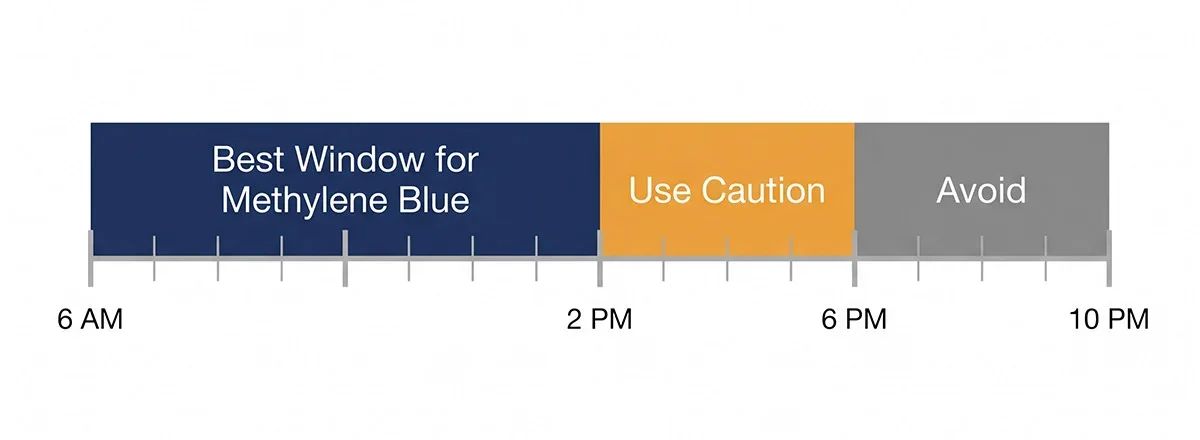
Most researchers who study or research with methylene blue take it in the morning or early afternoon. This is because methylene blue can be mildly stimulating due to its effects on mitochondrial metabolism, and taking it later in the day may interfere with winding down in the evening.
Due to its half-life of approximately 12 to 14 hours, a single daily dose in the morning is generally sufficient for sustained cognitive and energetic effects without disrupting sleep.
A single daily dose taken in the morning is the most common and practical approach. Splitting the dose across two times in a day is less commonly cited in the research literature.