Why Methylene Blue?
It Supports Mitochondrial Function
Studies support that methylene blue can enhance mitochondrial respiration by acting as an electron carrier in the electron transport chain. This helps support more efficient energy production at the cellular level.
Reference: Atamna et al., 2008 – Methylene blue improves mitochondrial function in aging cells.
It Supports Mood & Mental Energy
Clinical and observational studies suggest methylene blue helps regulate mood by influencing mitochondrial energy in neurons and modulating monoamine oxidase activity.
Reference: Naylor et al., 1986 – Use of methylene blue in mood disorders.
It Supports Cognitive Clarity & Neuroprotection
Research shows that low doses of methylene blue may improve memory consolidation, attention, and even offer neuroprotective benefits by reducing oxidative stress in the brain.
Reference: Rojas et al., 2012 – Methylene blue and memory enhancement in human and animal studies.
Is Methylene Blue Safe?
A Research Based Safety Guide
Methylene blue is one of the most studied compounds in its category with over 18,000 published studies and more than a century of use in clinical and pharmaceutical settings. For many people researching it for the first time, the first question is a simple one: is it safe? The honest answer is that it depends on three things: the grade of the product you are using, the amount you are taking and whether it interacts with anything else you are currently taking. For the right person using a quality product at an appropriate dose, the research paints a reassuring picture. For the wrong person, there are real risks worth understanding clearly before starting. This guide covers both sides without vagueness.
Methylene Blue is not intended to diagnose, treat, cure or prevent any disease. If you have any medical conditions or are taking prescription medications consult your doctor before use.
What the Research Actually Shows
The safety profile of methylene blue at low doses is well established across decades of clinical research. Several key findings from the literature are worth understanding.
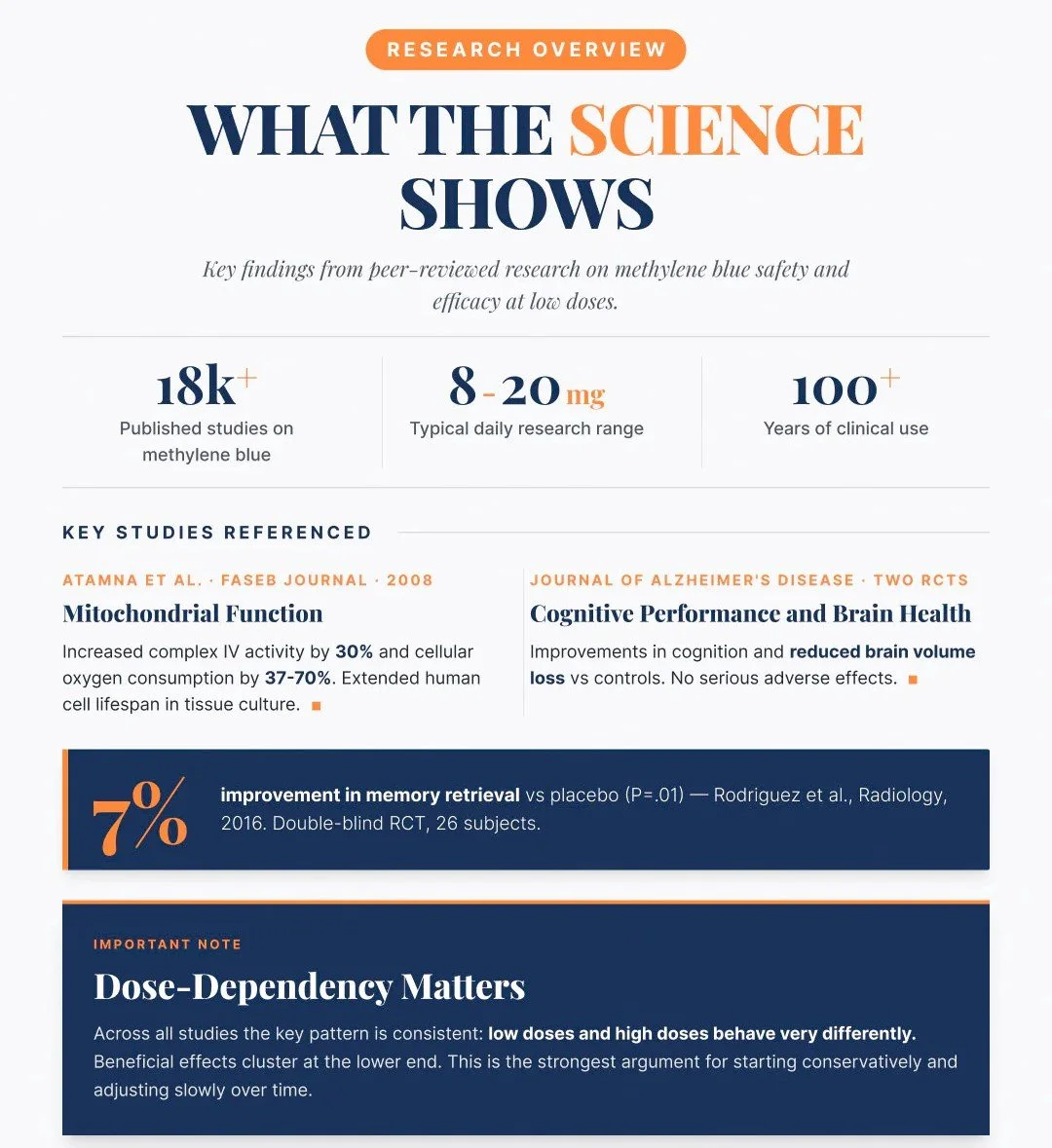
Clinical trials show strong tolerability at low doses. Studies consistently use amounts below 2 mg per kilogram of body weight (approximately 140 mg for a 70 kg adult) as the upper threshold without serious adverse effects. The vast majority of personal research use falls far below this, typically in the 8 to 20 mg per day range.
A 2008 study by Atamna and colleagues published in the FASEB Journal found that methylene blue supports mitochondrial function by acting as an electron carrier in the electron transport chain, helping cells produce energy more efficiently. The study also showed that methylene blue extended the lifespan of human cells in tissue culture by increasing mitochondrial complex IV activity and cellular oxygen consumption.
Two clinical trials published in the Journal of Alzheimer's Disease examined the effects of methylene blue on cognitive function and brain health. Both found promising results including improvements in cognitive performance and reductions in brain volume loss in participants receiving treatment compared to controls.
A 2016 randomized controlled trial published in Radiology by Rodriguez and colleagues examined the effects of low-dose methylene blue on brain function using fMRI imaging in healthy subjects. The study found that methylene blue increased brain activity during sustained attention and short-term memory tasks and improved memory retrieval by 7% compared to placebo, with no serious adverse effects reported.
Dose-dependency is a consistent finding across the research literature. Multiple studies examining different dose ranges have established that low doses and high doses of methylene blue behave quite differently. The beneficial effects observed in research tend to cluster at the lower end of the dosage range. Very high doses introduce a different risk profile altogether. This is one of the strongest arguments for starting conservatively and adjusting slowly rather than jumping to a larger amount.