Who Should Not Use Methylene Blue
There are specific groups for whom methylene blue is genuinely contraindicated. If you fall into any of these categories do not use methylene blue without explicit guidance from a qualified medical professional.
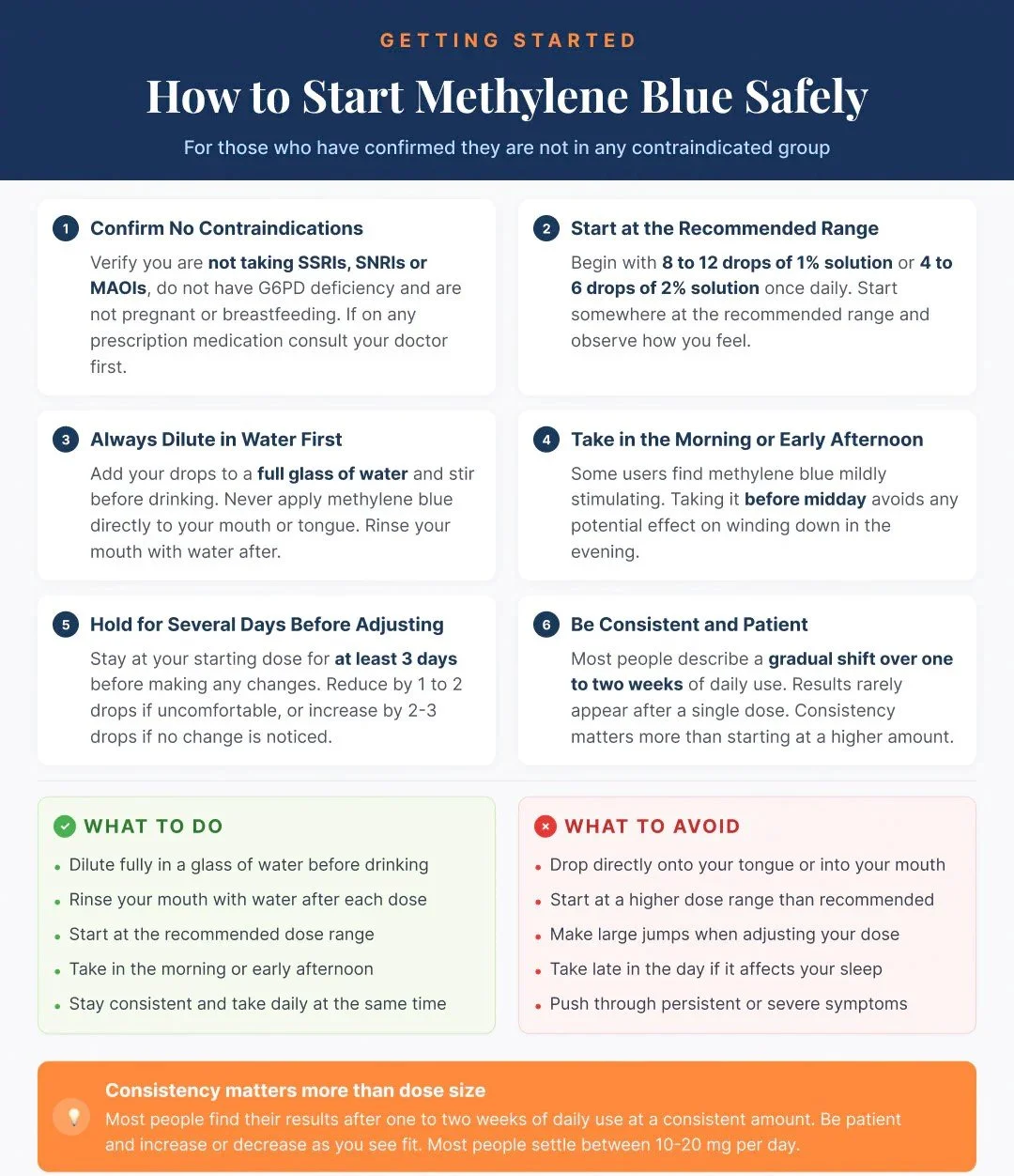
People taking SSRIs or SNRIs: this is the most critical interaction
Methylene blue is a potent inhibitor of monoamine oxidase A (MAO-A), an enzyme responsible for breaking down serotonin in the body. When combined with selective serotonin reuptake inhibitors (SSRIs) or serotonin-norepinephrine reuptake inhibitors (SNRIs) this creates a compounding effect that can push serotonin levels to potentially dangerous levels. This is known as serotonin syndrome.
Serotonin syndrome symptoms include agitation, confusion, rapid heart rate, high blood pressure, dilated pupils, muscle twitching and in severe cases seizures or loss of consciousness. It requires immediate medical attention.
Common SSRIs and SNRIs include fluoxetine (Prozac), sertraline (Zoloft), escitalopram (Lexapro), paroxetine (Paxil), citalopram (Celexa), venlafaxine (Effexor) and duloxetine (Cymbalta). If you are taking any medication in this class do not use methylene blue under any circumstances.
People taking MAO inhibitors
MAO inhibitors (MAOIs) such as phenelzine, tranylcypromine and selegiline interact with methylene blue through the same serotonin pathway described above. The combination significantly elevates the risk of serotonin syndrome. This includes both prescription MAOIs and certain medications used in other contexts such as linezolid, an antibiotic with MAO-inhibiting properties. Do not combine methylene blue with any MAOI.
People taking other serotonin-affecting substances
Beyond SSRIs and MAOIs there are other medications and supplements that affect serotonin levels and warrant serious caution. These include certain opioid pain medications such as meperidine, migraine treatments in the triptan class such as sumatriptan, dextromethorphan found in some cough medications and herbal supplements including St. John's Wort. If you are unsure whether something you take affects serotonin, check with your pharmacist or prescribing doctor before proceeding with methylene blue.
People with G6PD deficiency
Glucose-6-phosphate dehydrogenase (G6PD) deficiency is an inherited genetic condition that affects red blood cell function. In people with this condition the standard biochemical pathway through which methylene blue exerts its effects does not function as expected. Instead of producing its intended outcome methylene blue can trigger hemolytic anemia, a breakdown of red blood cells, which can range from mild to severe depending on the degree of deficiency. G6PD deficiency is more common in people of African, Mediterranean, Middle Eastern and South Asian descent. If you have known G6PD deficiency methylene blue is not appropriate for you.
Pregnant or breastfeeding individuals
There is insufficient safety data on methylene blue use during pregnancy or breastfeeding to make any confident assessment. Historic clinical use of intravenous methylene blue in pregnant women has been associated with adverse fetal outcomes. Out of an abundance of caution methylene blue should be avoided entirely during pregnancy and breastfeeding.
Why Product Grade Directly Affects Safety
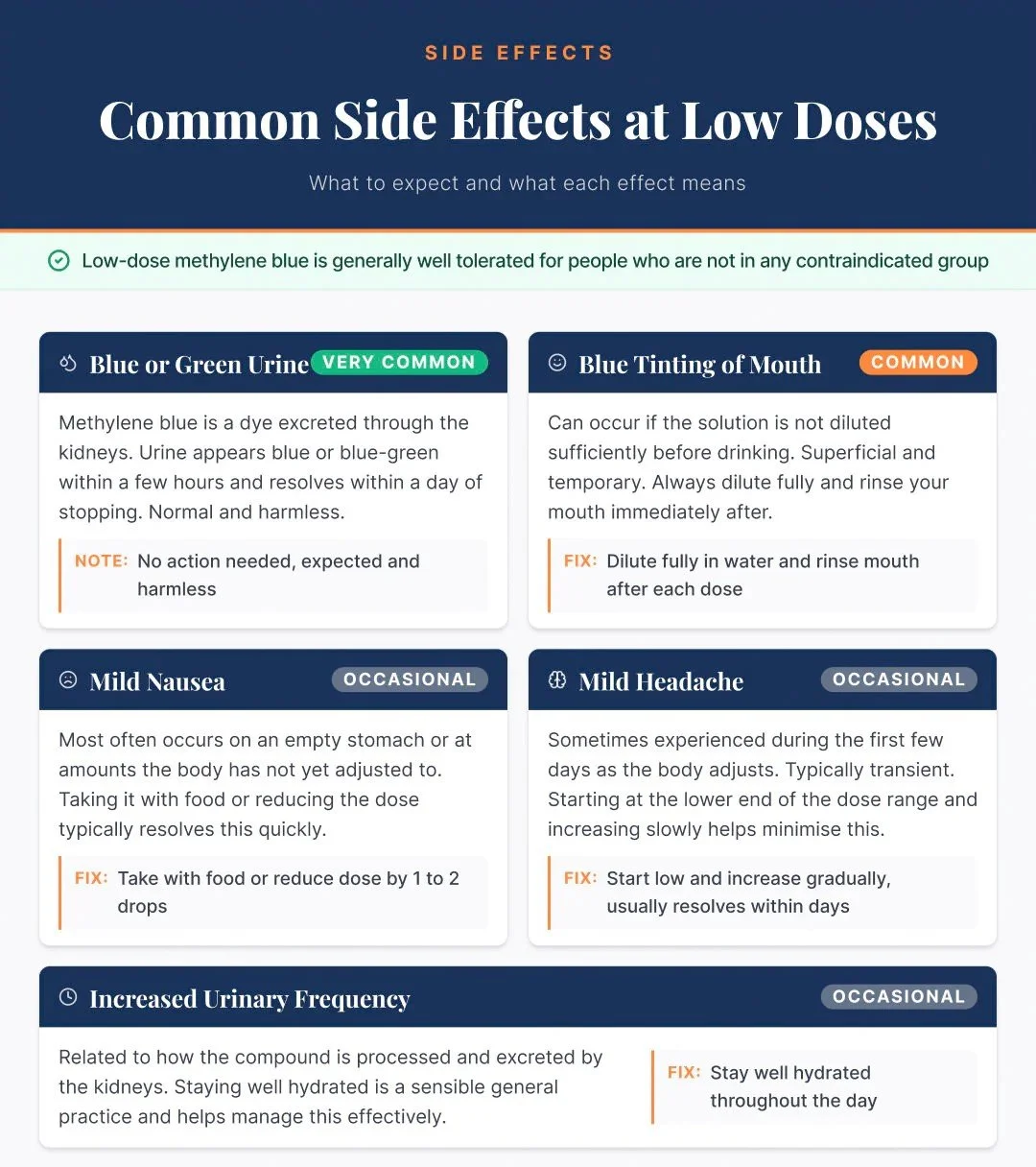
It is worth stating clearly: a significant proportion of safety concerns associated with methylene blue in online discussions relate not to the compound itself but to the quality of the product being used.
Methylene blue is available in two fundamentally different grades. USP-grade pharmaceutical methylene blue is manufactured under strict controlled conditions to meet standards set by the United States Pharmacopeia. It is independently verified for identity, potency, purity and the absence of harmful contaminants including heavy metals, microbial agents and residual solvents.
Industrial or technical grade methylene blue is manufactured for fabric dyeing, biological staining and chemical processing applications. It is not held to pharmaceutical purity standards and can contain meaningful levels of heavy metal contaminants such as lead, arsenic and cadmium as well as chemical residues from the manufacturing process. These are genuine safety concerns that have nothing to do with methylene blue itself and everything to do with what else is in the bottle.
This distinction matters because not all sellers are transparent about which grade they are supplying. We use a supplier who provides us with a Certificate of Analysis from an independent third-party laboratory on each batch of methylene blue product. The COA corresponds to the specific batch of product we are receiving and covers the final bottled solution, not just the raw powder. Testing the powder before it is dissolved and bottled does not confirm what is in the product you actually receive.