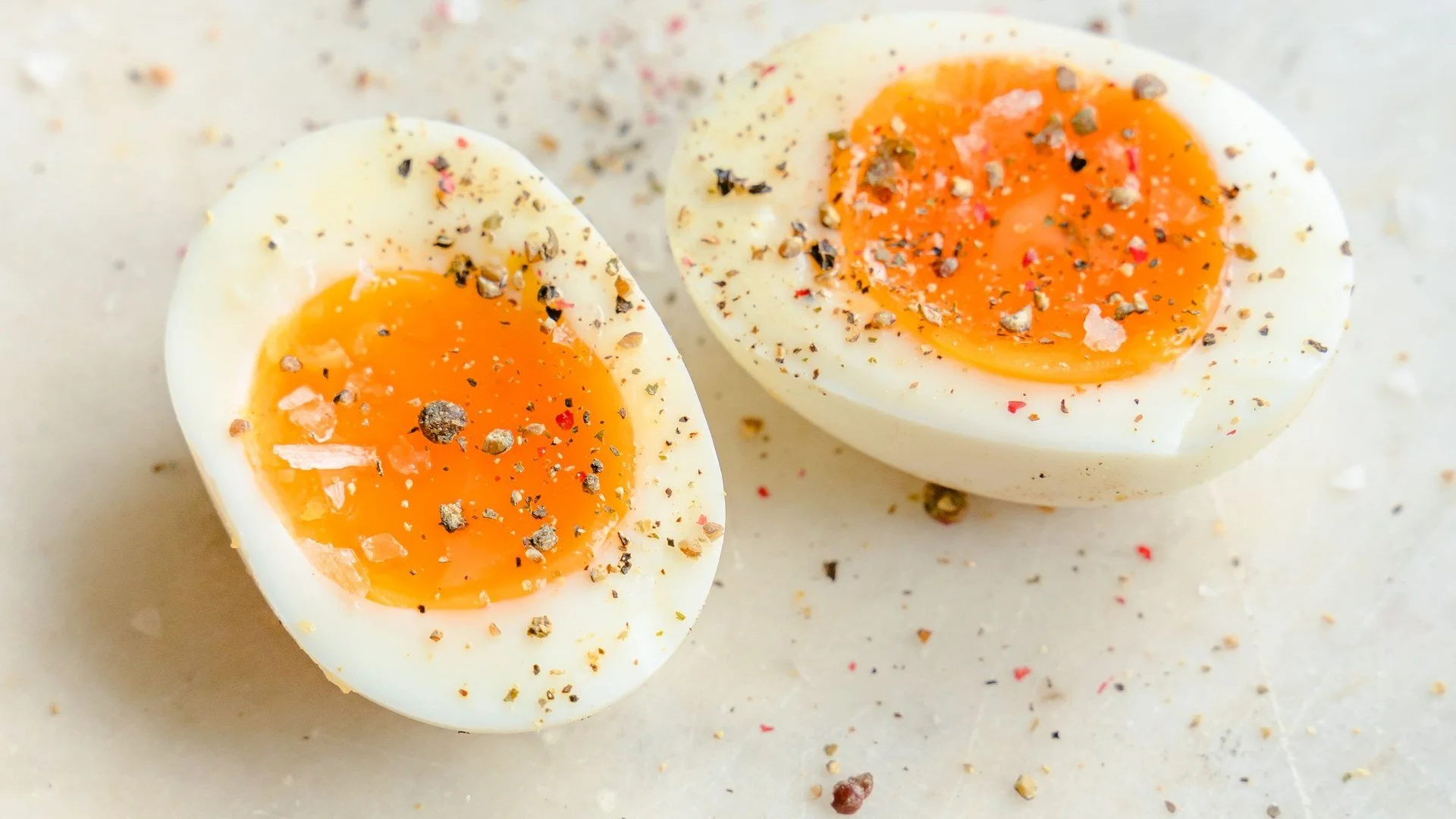
Photo by Antoni Shkraba on Pexels.
By Dr. Joey Grice
Summary: Folate and B12 get most of the methylation attention, but choline is another key player. Research shows most Americans eat less choline than recommended, and common variations in genes like PEMT may change how much choline a person needs. Here's what the studies found, and where they fall short.
What Choline Does in the Methylation Cycle
Choline is a nutrient your body uses to build cell membranes, make the messenger acetylcholine, and move fat through the body in lipoproteins. It also feeds the methylation cycle. Inside some cells, especially liver cells, choline can be turned into betaine, which donates a methyl group to homocysteine to form methionine. This backup route works alongside the folate and B12 pathway from our earlier articles.
Your body can make some choline on its own through an enzyme coded by the PEMT gene. According to a 2009 review by Zeisel and da Costa, this inside supply alone is not enough to meet human needs, which is why choline is considered an essential nutrient from food.
Most People Fall Short
In 2016, Wallace and Fulgoni looked at national nutrition survey data (NHANES 2009–2012) from 16,809 Americans. Only about 11% reached the Adequate Intake for choline. Among adults 19 and older, just 6.6% did, and women were less likely than men to reach it.
Limitations: dietary surveys rely on what people remember eating, and the Adequate Intake is an estimate, not a precise requirement for each person.
When Choline Runs Low: Sex, Hormones, and Genes
In a 2007 study from Dr. Steven Zeisel's group at the University of North Carolina, Fischer and colleagues fed 57 healthy adults a very low choline diet for up to 42 days under close monitoring. Signs of organ stress, such as fatty liver or muscle damage, appeared in 77% of men and 80% of postmenopausal women, but only 44% of premenopausal women. Six men showed these signs even while eating the recommended amount of choline. Function returned to normal when choline was added back.
Why would premenopausal women be more protected? A separate lab study by Resseguie and colleagues found that estrogen turned up activity of the PEMT gene in human and mouse liver cells, increasing the enzyme that helps make choline.
Genes mattered too. In a 2006 study from the same team, da Costa and colleagues tested gene variations in 57 people placed on a low choline diet. Among carriers of a common PEMT variant (rs12325817, the "C" allele), 18 of 23 (78%) developed signs of organ dysfunction. Two variants in another gene, CHDH, also influenced risk (one linked with lower risk, one with higher), while a studied BHMT variant showed no link.
Limitations: these were small, short-term studies done in a research unit with a very restricted diet. The estrogen findings come from cells in a lab dish, not people. A gene variant points to a tendency, not a diagnosis, and results may not apply to everyone.
What This Means for a Genetic Wellness Plan
Choline needs are not one-size-fits-all. Sex, life stage, and gene variations like PEMT may shape how much choline someone needs from food. Among the richest food sources are liver, eggs, and wheat germ, with meats also contributing; foods like soy and broccoli provide smaller amounts.
At Genetic Wellness Group, our 94-gene test looks at methylation genes together rather than one at a time, so nutrition and supplementation can be targeted to how your pathways work. Nutrients don't change your genes, but the right support can help those pathways do their jobs.
Explore Your Genetic Wellness Plan
Curious whether PEMT or other methylation genes affect your nutrition needs? Schedule a genetic wellness consultation with Genetic Wellness Group at our Mars, PA, or Mt. Washington (Pittsburgh) office. Visit geneticwg.com/contact to get started.
This article is for educational purposes only and is not a substitute for personalized advice. Dietary supplements are not intended to diagnose, treat, cure, or prevent any disease. Talk with your healthcare provider before starting or changing any supplement, especially if you are pregnant, nursing, taking medications, or managing a condition.
References
Zeisel SH, da Costa KA. Choline: an essential nutrient for public health. Nutr Rev. 2009;67(11):615-623. https://pubmed.ncbi.nlm.nih.gov/19906248/
Wallace TC, Fulgoni VL 3rd. Assessment of total choline intakes in the United States. J Am Coll Nutr. 2016;35(2):108-112. https://pubmed.ncbi.nlm.nih.gov/26886842/
Fischer LM, daCosta KA, Kwock L, et al. Sex and menopausal status influence human dietary requirements for the nutrient choline. Am J Clin Nutr. 2007;85(5):1275-1285. https://pubmed.ncbi.nlm.nih.gov/17490963/
Resseguie M, Song J, Niculescu MD, et al. Phosphatidylethanolamine N-methyltransferase (PEMT) gene expression is induced by estrogen in human and mouse primary hepatocytes. FASEB J. 2007;21(10):2622-2632. https://pubmed.ncbi.nlm.nih.gov/17456783/
da Costa KA, Kozyreva OG, Song J, et al. Common genetic polymorphisms affect the human requirement for the nutrient choline. FASEB J. 2006;20(9):1336-1344. https://pubmed.ncbi.nlm.nih.gov/16816108/
