Why Methylene Blue?
It Supports Mitochondrial Function
Studies support that methylene blue can enhance mitochondrial respiration by acting as an electron carrier in the electron transport chain. This helps support more efficient energy production at the cellular level.
Reference: Atamna et al., 2008 – Methylene blue improves mitochondrial function in aging cells.
It Supports Mood & Mental Energy
Clinical and observational studies suggest methylene blue helps regulate mood by influencing mitochondrial energy in neurons and modulating monoamine oxidase activity.
Reference: Naylor et al., 1986 – Use of methylene blue in mood disorders.
It Supports Cognitive Clarity & Neuroprotection
Research shows that low doses of methylene blue may improve memory consolidation, attention, and even offer neuroprotective benefits by reducing oxidative stress in the brain.
Reference: Rojas et al., 2012 – Methylene blue and memory enhancement in human and animal studies.
Is Methylene Blue Safe?
A Research Based Safety Guide
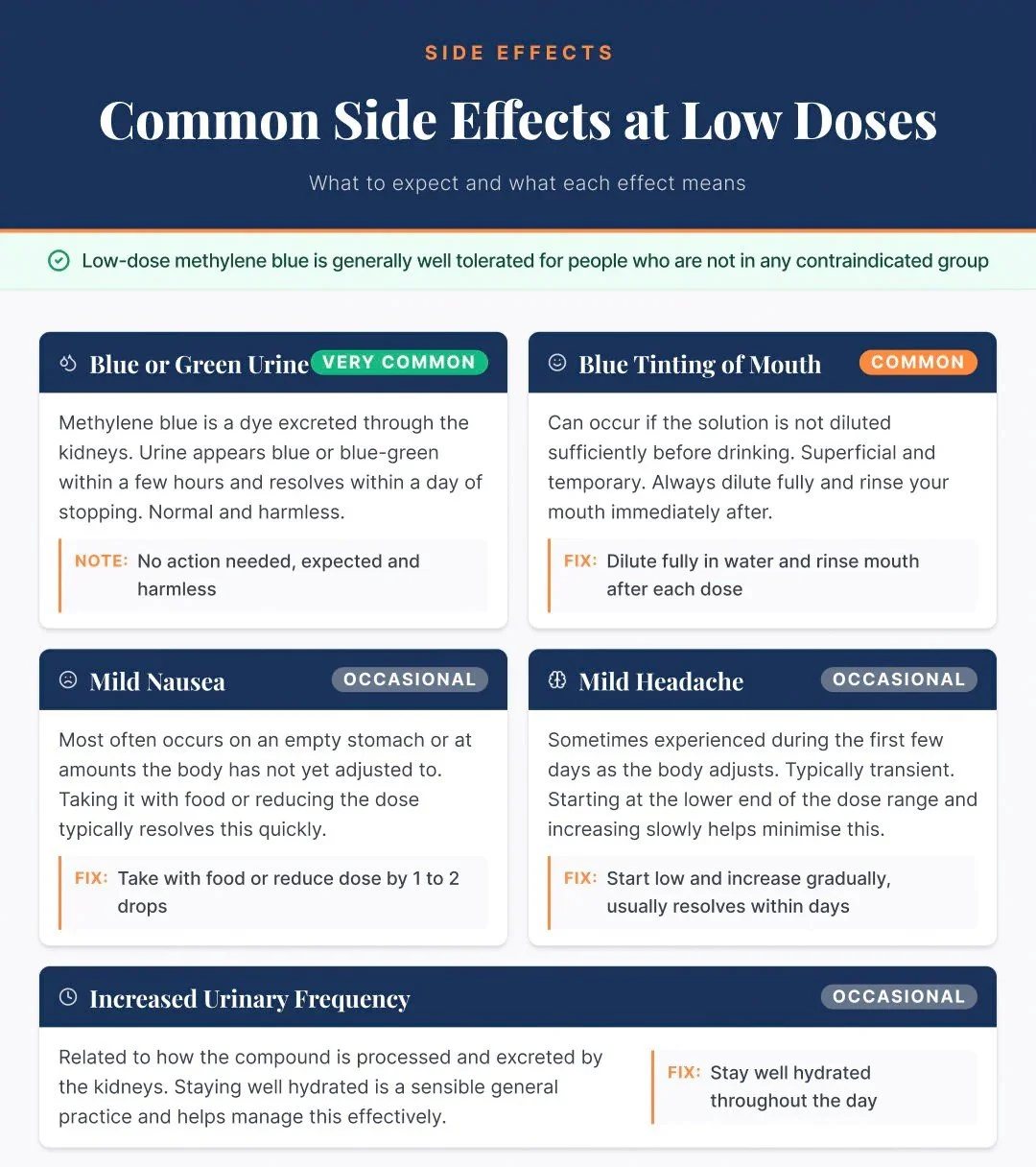
Methylene blue is one of the most studied compounds in its category with over 18,000 published studies and more than a century of use in clinical and pharmaceutical settings. For many people researching it for the first time, the first question is a simple one: is it safe? The honest answer is that it depends on three things: the grade of the product you are using, the amount you are taking and whether it interacts with anything else you are currently taking. For the right person using a quality product at an appropriate dose, the research paints a reassuring picture. For the wrong person, there are real risks worth understanding clearly before starting. This guide covers both sides without vagueness.
Methylene Blue is not intended to diagnose, treat, cure or prevent any disease. If you have any medical conditions or are taking prescription medications consult your doctor before use.
What the Research Actually Shows
The safety profile of methylene blue at low doses is well established across decades of clinical research. Several key findings from the literature are worth understanding.
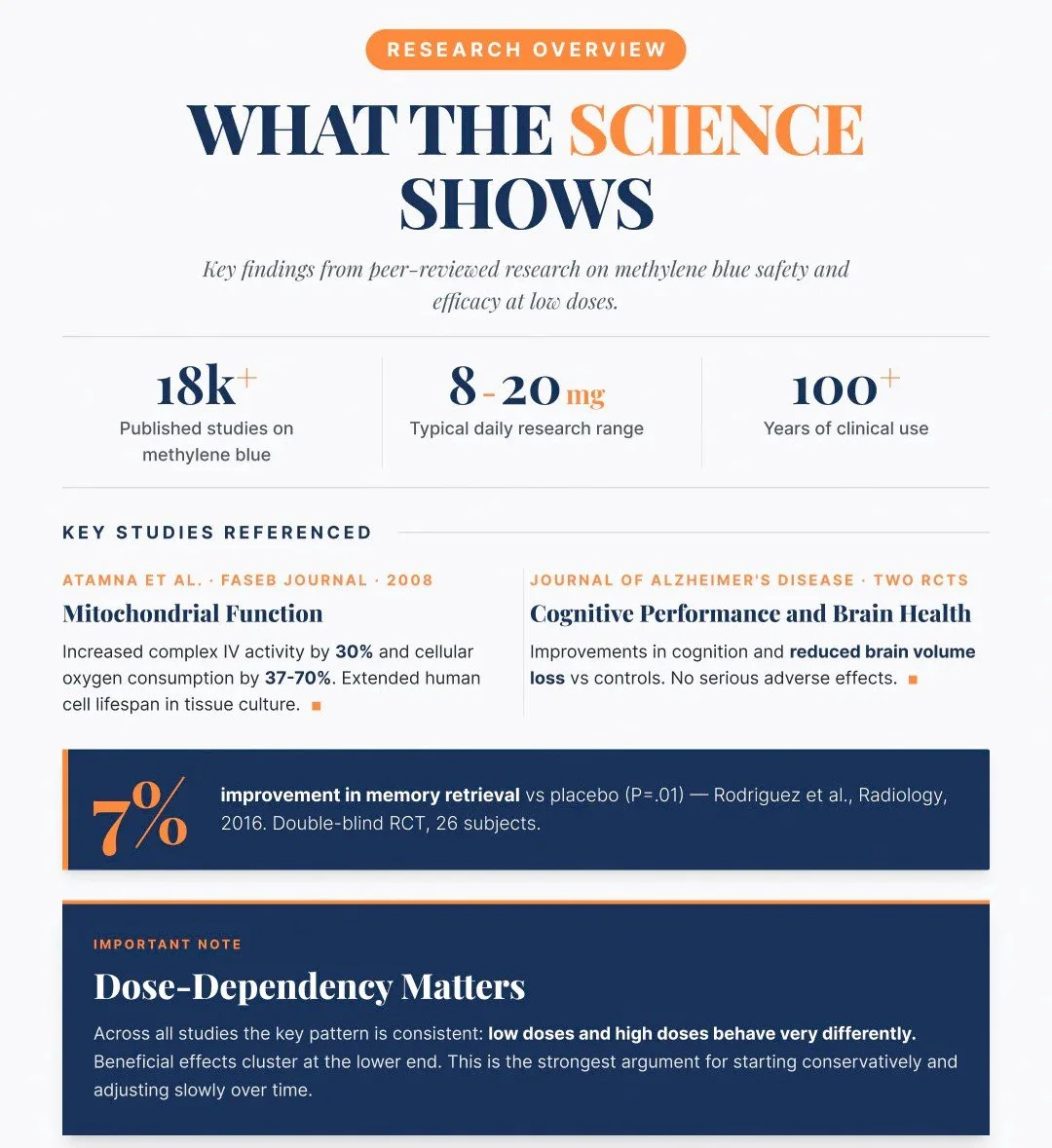
Clinical trials show strong tolerability at low doses. Studies consistently use amounts below 2 mg per kilogram of body weight (approximately 140 mg for a 70 kg adult) as the upper threshold without serious adverse effects. The vast majority of personal research use falls far below this, typically in the 8 to 20 mg per day range.
A 2008 study by Atamna and colleagues published in the FASEB Journal found that methylene blue supports mitochondrial function by acting as an electron carrier in the electron transport chain, helping cells produce energy more efficiently. The study also showed that methylene blue extended the lifespan of human cells in tissue culture by increasing mitochondrial complex IV activity and cellular oxygen consumption.
Two clinical trials published in the Journal of Alzheimer's Disease examined the effects of methylene blue on cognitive function and brain health. Both found promising results including improvements in cognitive performance and reductions in brain volume loss in participants receiving treatment compared to controls.
A 2016 randomized controlled trial published in Radiology by Rodriguez and colleagues examined the effects of low-dose methylene blue on brain function using fMRI imaging in healthy subjects. The study found that methylene blue increased brain activity during sustained attention and short-term memory tasks and improved memory retrieval by 7% compared to placebo, with no serious adverse effects reported.
Dose-dependency is a consistent finding across the research literature. Multiple studies examining different dose ranges have established that low doses and high doses of methylene blue behave quite differently. The beneficial effects observed in research tend to cluster at the lower end of the dosage range. Very high doses introduce a different risk profile altogether. This is one of the strongest arguments for starting conservatively and adjusting slowly rather than jumping to a larger amount.
Who Should Not Use Methylene Blue
This is the most important section on this page. There are specific groups for whom methylene blue is genuinely contraindicated. If you fall into any of these categories do not use methylene blue without explicit guidance from a qualified medical professional.
People taking SSRIs or SNRIs: this is the most critical interaction
Methylene blue is a potent inhibitor of monoamine oxidase A (MAO-A), an enzyme responsible for breaking down serotonin in the body. When combined with selective serotonin reuptake inhibitors (SSRIs) or serotonin-norepinephrine reuptake inhibitors (SNRIs) this creates a compounding effect that can push serotonin levels to potentially dangerous levels. This is known as serotonin syndrome.
Serotonin syndrome symptoms include agitation, confusion, rapid heart rate, high blood pressure, dilated pupils, muscle twitching and in severe cases seizures or loss of consciousness. It requires immediate medical attention.
Common SSRIs and SNRIs include fluoxetine (Prozac), sertraline (Zoloft), escitalopram (Lexapro), paroxetine (Paxil), citalopram (Celexa), venlafaxine (Effexor) and duloxetine (Cymbalta). If you are taking any medication in this class do not use methylene blue under any circumstances.
People taking MAO inhibitors
MAO inhibitors (MAOIs) such as phenelzine, tranylcypromine and selegiline interact with methylene blue through the same serotonin pathway described above. The combination significantly elevates the risk of serotonin syndrome. This includes both prescription MAOIs and certain medications used in other contexts such as linezolid, an antibiotic with MAO-inhibiting properties. Do not combine methylene blue with any MAOI.
People taking other serotonin-affecting substances
Beyond SSRIs and MAOIs there are other medications and supplements that affect serotonin levels and warrant serious caution. These include certain opioid pain medications such as meperidine, migraine treatments in the triptan class such as sumatriptan, dextromethorphan found in some cough medications and herbal supplements including St. John's Wort. If you are unsure whether something you take affects serotonin, check with your pharmacist or prescribing doctor before proceeding with methylene blue.
People with G6PD deficiency
Glucose-6-phosphate dehydrogenase (G6PD) deficiency is an inherited genetic condition that affects red blood cell function. In people with this condition the standard biochemical pathway through which methylene blue exerts its effects does not function as expected. Instead of producing its intended outcome methylene blue can trigger hemolytic anemia, a breakdown of red blood cells, which can range from mild to severe depending on the degree of deficiency. G6PD deficiency is more common in people of African, Mediterranean, Middle Eastern and South Asian descent. If you have known G6PD deficiency methylene blue is not appropriate for you.
Pregnant or breastfeeding individuals
There is insufficient safety data on methylene blue use during pregnancy or breastfeeding to make any confident assessment. Historic clinical use of intravenous methylene blue in pregnant women has been associated with adverse fetal outcomes. Out of an abundance of caution methylene blue should be avoided entirely during pregnancy and breastfeeding.
Why Product Grade Directly Affects Safety
It is worth stating clearly: a significant proportion of safety concerns associated with methylene blue in online discussions relate not to the compound itself but to the quality of the product being used.
Methylene blue is available in two fundamentally different grades. USP-grade pharmaceutical methylene blue is manufactured under strict controlled conditions to meet standards set by the United States Pharmacopeia. It is independently verified for identity, potency, purity and the absence of harmful contaminants including heavy metals, microbial agents and residual solvents.
Industrial or technical grade methylene blue is manufactured for fabric dyeing, biological staining and chemical processing applications. It is not held to pharmaceutical purity standards and can contain meaningful levels of heavy metal contaminants such as lead, arsenic and cadmium as well as chemical residues from the manufacturing process. These are genuine safety concerns that have nothing to do with methylene blue itself and everything to do with what else is in the bottle.
This distinction matters because not all sellers are transparent about which grade they are supplying. We use a supplier who provides us with a Certificate of Analysis from an independent third-party laboratory on each batch of methylene blue product. The COA corresponds to the specific batch of product we are receiving and covers the final bottled solution, not just the raw powder. Testing the powder before it is dissolved and bottled does not confirm what is in the product you actually receive.
Can You Take Methylene Blue Every Day?
It is one of the most common questions from people who are new to methylene blue research: can you take it every day, or do you need to take breaks? The answer is more nuanced than a simple yes or no, and understanding why leads to some genuinely interesting science about how methylene blue works at the cellular level.
The Short Answer
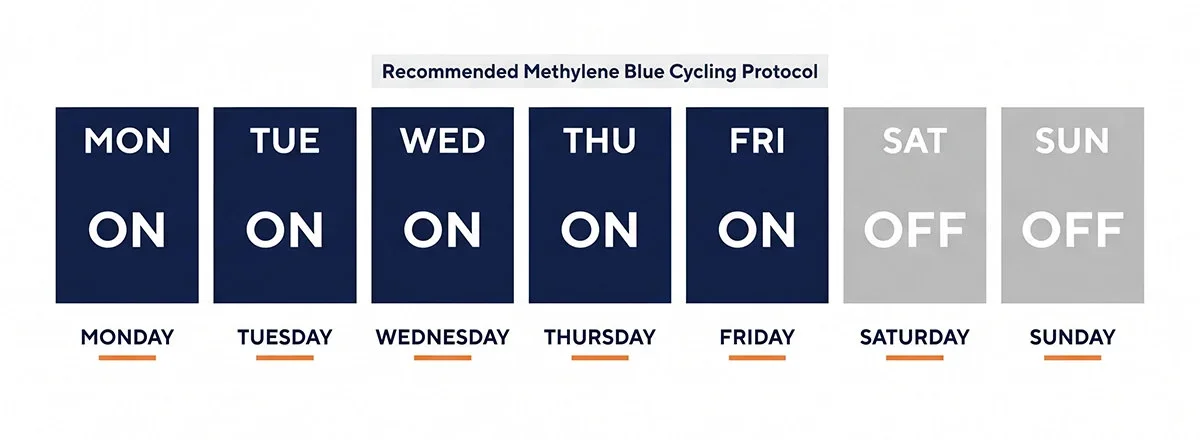
You can take methylene blue daily, and many researchers do. But most protocols that follow the research closely recommend cycling rather than continuous daily use. The most commonly referenced cycling approach is five days on followed by two days off each week.
The reason has everything to do with how methylene blue behaves at different doses and over time, which brings us to one of the most important concepts in methylene blue research.
What Is Hormesis and Why Does It Matter Here?
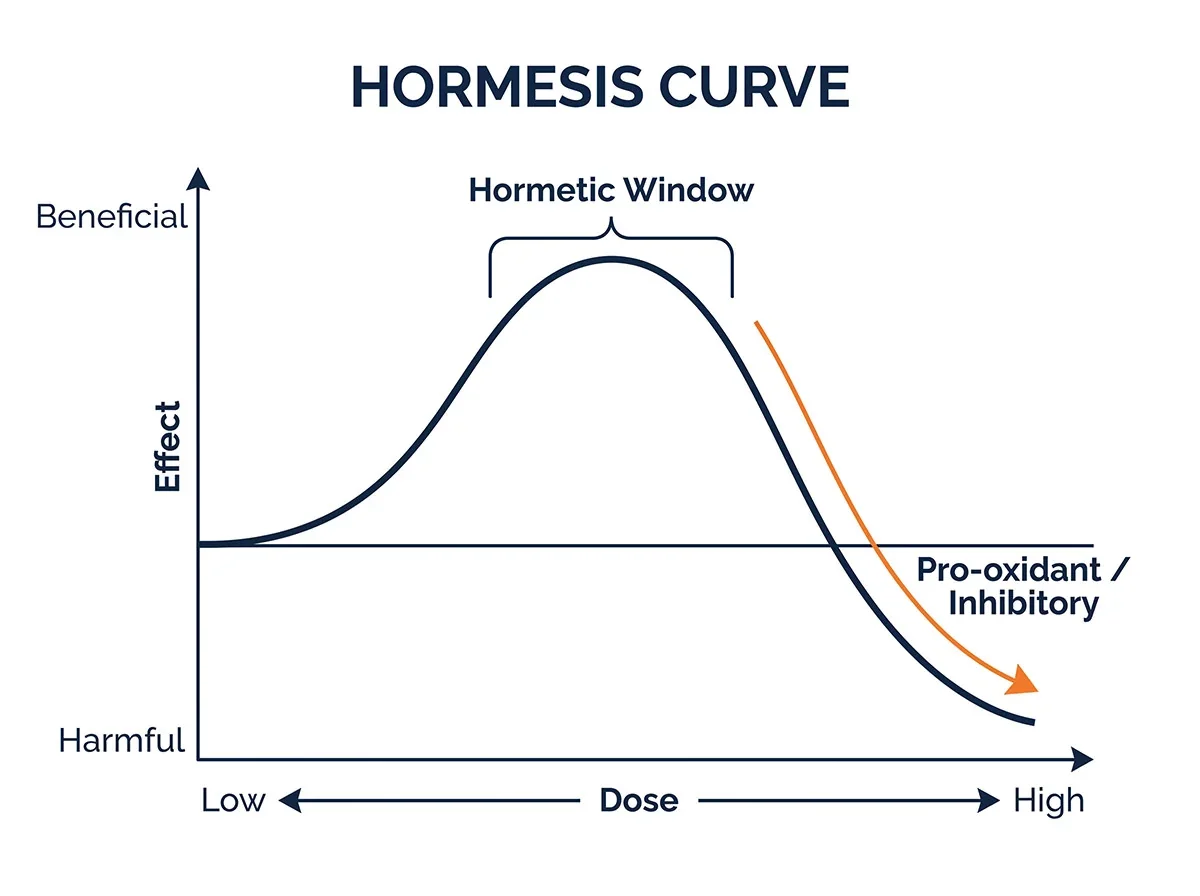
Methylene blue is what researchers call a hormetic compound. Hormesis describes a specific pattern of response where low doses produce beneficial effects and higher doses either produce no benefit or actively reverse it.
At low concentrations methylene blue acts as an efficient electron carrier in the mitochondrial electron transport chain. It steps in to help cells produce energy more effectively. But at higher concentrations the same compound flips from behaving as an antioxidant to behaving as a pro-oxidant, actually generating the reactive oxygen species it would otherwise help neutralize.
Low concentrations between 0.5 and 4 micromolar enhance mitochondrial function, while higher concentrations above 20 micromolar inhibit cytochrome c oxidase and impair respiration.
This is not a minor footnote. It is the foundational reason why researchers treat methylene blue very differently from most compounds. More is not better. In fact, more can actively work against you.
Why Cycling Is Recommended
There are two distinct reasons why cycling methylene blue is considered the more responsible research approach: preventing tolerance and managing cumulative dose.
Preventing receptor adaptation
When the body is exposed to any active compound consistently without breaks it can begin to adapt. Receptor sensitivity changes. The compound becomes less effective at the same dose over time. Taking periodic breaks is thought to preserve the body's responsiveness and maintain the hormetic response.
A study published in Brain Research (Wen et al., 2011) found that cyclical dosing protocols, with five days on and two days off, maintained hormetic benefits while preventing receptor adaptation.
Keeping cumulative dose in check
Methylene blue has a half-life of approximately 12 to 14 hours, meaning it clears relatively quickly from the system. However taking it every day without breaks does accumulate higher overall weekly exposure than a cycling protocol. Most clinical protocols use methylene blue intermittently rather than daily, or cycle it with five days on and two days off.
Limited long-term daily use data
It is worth being transparent about what the research does and does not tell us. Daily use at low doses appears well tolerated in short-term observations, but "appears well tolerated" is not the same as "proven safe long-term." Honest researchers acknowledge this distinction. Cycling is a sensible precautionary approach given that long-term daily use data in humans is still limited.
The 5-On 2-Off Protocol
The five days on two days off approach is the most widely referenced cycling structure in methylene blue research. It is practical, easy to follow and aligns well with a standard Monday through Friday weekday routine with breaks on the weekend.
Research supports cycling strategies of five days on and two days off, or three weeks on and one week off, to prevent receptor downregulation and maintain compound efficacy over long-term use.
Some researchers also use a three weeks on one week off structure, particularly for longer research protocols. Both approaches serve the same underlying purpose: maintaining the body's responsiveness to the compound while managing cumulative exposure.
What About Timing Within the Day?
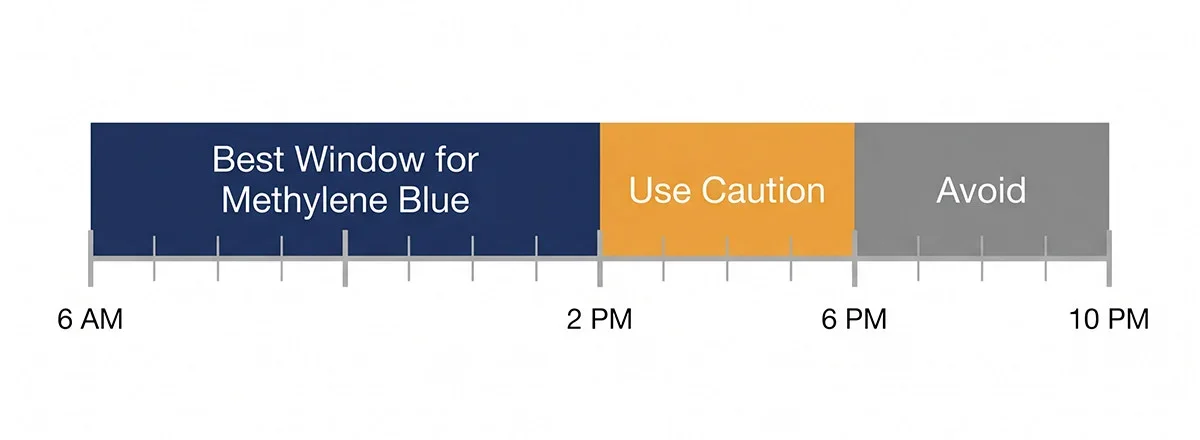
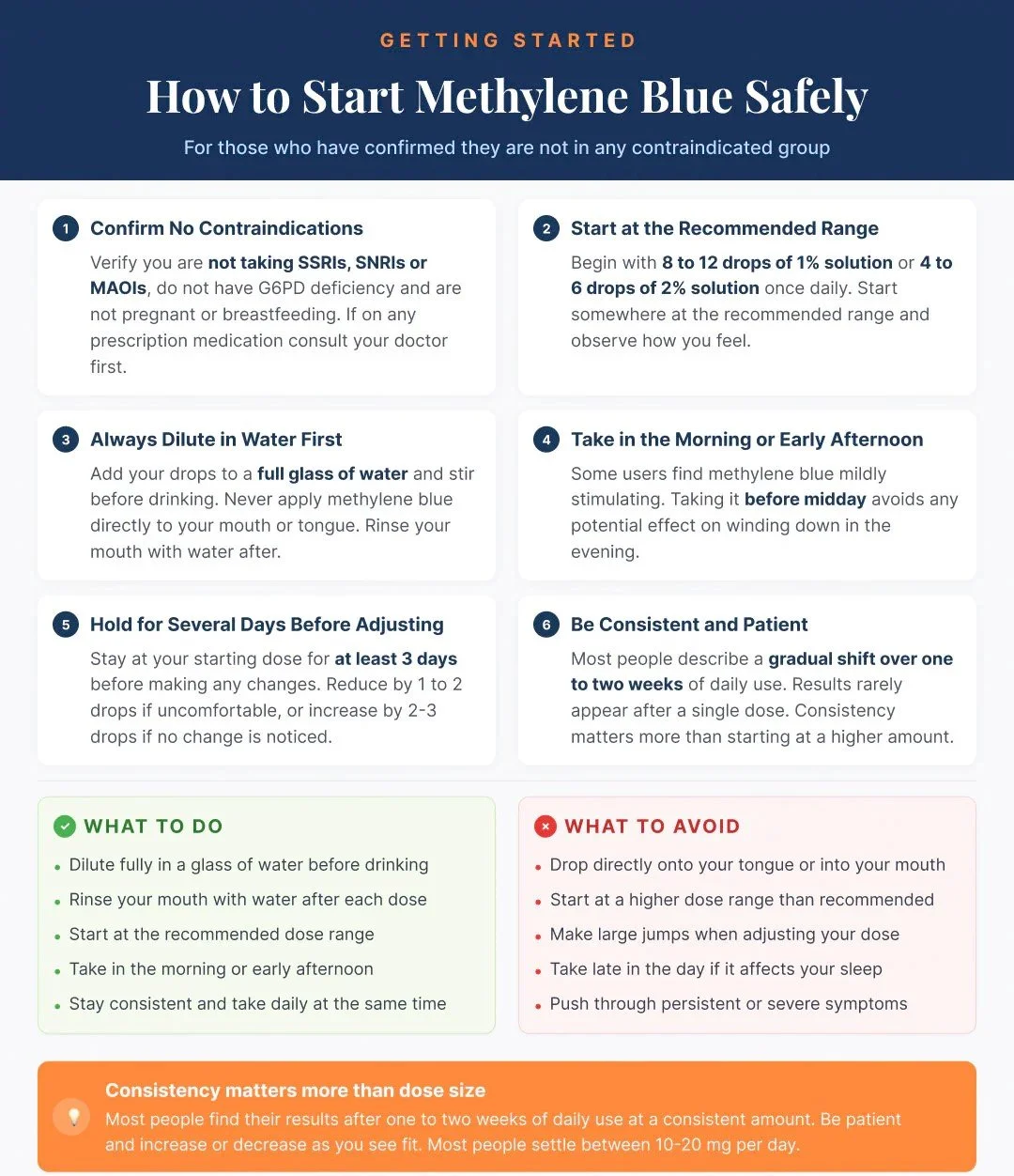
Most researchers who study or research with methylene blue take it in the morning or early afternoon. This is because methylene blue can be mildly stimulating due to its effects on mitochondrial metabolism, and taking it later in the day may interfere with winding down in the evening.
Due to its half-life of approximately 12 to 14 hours, a single daily dose in the morning is generally sufficient for sustained cognitive and energetic effects without disrupting sleep.
A single daily dose taken in the morning is the most common and practical approach. Splitting the dose across two times in a day is less commonly cited in the research literature.