What Is Low-Level Laser Therapy?
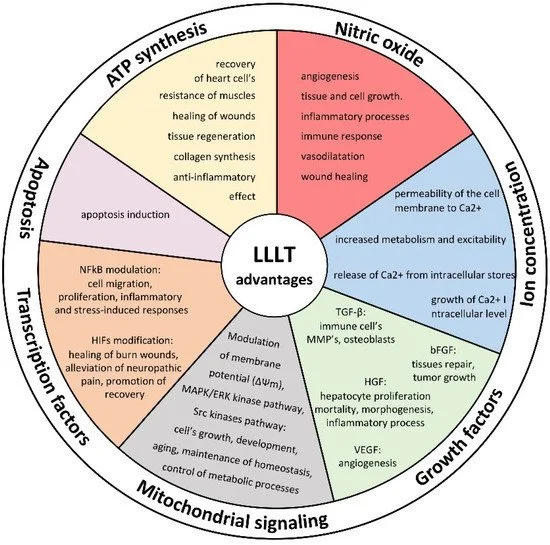
Low-Level Laser Therapy (LLLT) is a cutting-edge, non-invasive treatment that utilizes specific wavelengths of light to stimulate cellular function and promote healing. Unlike high-intensity lasers used in surgical procedures, LLLT employs low-power lasers or light-emitting diodes (LEDs) to penetrate the skin without causing damage. This therapy is renowned for its ability to reduce inflammation, alleviate pain, and accelerate tissue repair, making it a valuable tool for managing conditions such as arthritis, soft tissue injuries, and chronic pain. By enhancing cellular energy production and modulating biological processes, LLLT offers a scientifically-backed approach to healing that aligns with the body's natural recovery mechanisms, reaching the cells directly and providing a promising alternative for those seeking effective, non-invasive therapeutic options.
Low Level Laser Therapy (LLLT)
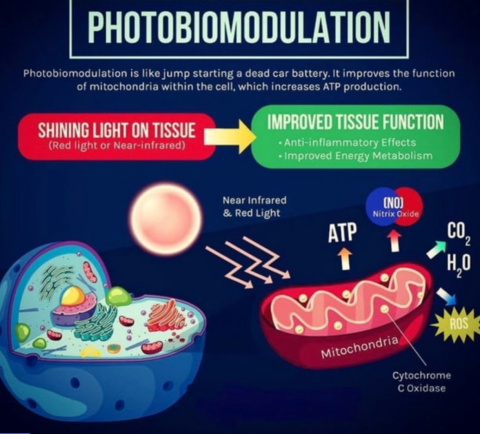
Low-level laser therapy (LLLT) targets mitochondria by stimulating cytochrome c oxidase, boosting ATP production, and reducing oxidative stress. Red and near-infrared wavelengths (650nm to 850nm) power this cellular mechanism.
Key Cellular Mechanisms
Cytochrome c Oxidase: Photons are absorbed by this critical enzyme in mitochondrial complex IV.
Nitric Oxide Release: Light dissociates inhibitory nitric oxide, freeing up oxygen consumption.
ATP Synthesis: Electron flow increases, accelerating adenosine triphosphate energy production.
Reactive Oxygen Species: Low-dose metabolic stress helps modulate helpful antioxidant and cell defense pathways.
Low-Level Laser Therapy vs Red Light Therapy: What’s The Difference?
Technology and Light Source
Low-Level Laser Therapy (LLLT):
Utilizes low-power lasers.
Typically employs a coherent light source, meaning the light waves are synchronized.
Focuses on specific wavelengths, often in the red to near-infrared spectrum.
Red Light Therapy (RLT):
Primarily uses LEDs to deliver red and near-infrared light.
Involves non-coherent light, where the light waves are not synchronized.
Covers a broader range of wavelengths within the red and near-infrared spectrum.
Mechanism of Action
LLLT:
Penetrates deeper into tissues, targeting specific areas for therapeutic effects.
Stimulates cellular processes by enhancing mitochondrial function and ATP production.
Often used for precise applications, such as targeting specific pain points or injuries.
RLT:
Generally penetrates the skin at shallower depths compared to LLLT.
Boosts overall cellular energy and promotes natural repair processes.
Known for its broad applications, including skin rejuvenation and inflammation reduction.
Applications and Benefits
LLLT:
Effective for pain relief, reducing inflammation, and accelerating tissue repair.
Commonly used in medical and therapeutic settings for conditions like arthritis and soft tissue injuries.
Offers targeted treatment for specific ailments, making it ideal for focused therapeutic interventions.
RLT:
Widely used for skincare, anti-aging, and muscle recovery.
Helps improve skin texture, reduce wrinkles, and support wound healing.
Offers a holistic approach to wellness, suitable for general health and beauty enhancements.
Benefits of Low Level Laser Therapy